Ten miles from Huntingdon, my home, sits a piece of land that is used for two distinct purposes. To some folks this land is known as McAlevy's Fort, a rural community home to farms, churches, a charter school, historic buildings, and of course, the people that attend to and inhabit these places.
To another cohort of people, this land is more frequently known as Rt. 26--the main thorough-way that leads north to State College.
To the former, its a space to be. The latter, a space to travel through.
An intersection at the north side of this town has an uncertain future. PennDOT has red-flagged it as dangerous and inconvenient to motorists and have thereby drafted plans to rework the road and in the process remove two buildings and a stop sign. Community members are petitioning the construction, arguing that doing so would put the community's safety and well-being at risk as motorists that already speed through their neighborhood will have another obstacle removed.
The last I heard, they're going ahead with the project. The needs of McAlevy's Fort have been overshadowed by the needs of Route 26.
There's more to the story, but this issue and talking to folks about it has reminded me how often our culture views space as something to move through rather than something to reside in.
This summer I have fallen victim yet again to this mode of being.
I have been rushing through time and space with a list of tasks in my head and "Excuse me", "Pardon me", "I must be going"s on my lips. As an optimist whose optimism extends to how many hours I think are in a day, time management has never come easily to me. But between a full-time job with additional responsibilities, moving, starting a business and trying to end another job well, this summer was the first time I ever went for so long without a full night's rest, so few meals and virtually no time spent reading, praying or writing.
The last few months I have failed miserably at adventuring slowly.
Now, I have no desire to have a pity party for myself--trust me, I've had plenty of those and I can only send my regrets and gratitude to the longsuffering ears that patiently listened. But rather, I'd like to share what I've learned, quite certainly more for my sake than yours.
What happens when you work too much:
1. You can't love people.
When I am too busy, people become inhuman to me. They are no longer creatures made in the image of God with hopes, pain, gifts and stories, but are interruptions--obstacles standing between me and the thing I need to get to next. The lesson I learned (not for the first time, and probably not for the last) is no matter how "noble" that "next thing" I am trying to get to is, if it routinely makes me treat people as objects or obstacles, I need to rethink some things.
2. You can't pray.
Sure, I can say "Dear Jesus, thank you for this food." I can attend church and say "Amen." I can pray the liturgy of hours. But I cannot fully enter prayer. I can't bring my weariness to the one who promises to give me rest. There's no time. I can't receive Christ's words of hope, joy and peace. There's no time. The caveat of course, is that in God's endless mercy, our groans can be prayer. Our "Ugh! I don't even know what's going ON anymore!" can be prayer. And in God's endless mercy, he extends peace to us. But it is still up to us to receive that peace. And when I'm all-consumed with my work, that reception is not happening. There's no time.
3. You can't worship.
Worship is being in awe. Awe is what happens when we lift our heads and see clearly the awesomeness of our Creator, our Redeemer, of the world, and of its redemption. When my nose is relentlessly to the grindstone, I cannot look up, I am not inspired, and my so-called worship is nothing but a white-washed tomb.
So much around us invites us to be on the go, to move forward, to plan for the next thing. We are urged to be chronic commuters, but at what expense?
Is it possible to live so that space and time are no longer means to an end, but an end in and of themselves?
Could preparing dinner be a holy act, a time of prayer for those who have no food to prepare?
Might the most monotonous moments of my workday reveal themselves as opportunities to be faithful in the little things?
If I leave ten minutes earlier for work, would I find my commute is full of graces? Might I notice the changing position of the sun and the color of the leaves as the summer wanes? Or perhaps I'll notice anew the neighborhoods I pass through and in my recollection pass through them more slowly.
Most of us have the freedom to restructure our lives so that we are free to be where we are and not just chronic commuters. And perhaps if we did a little more of it, we'd be more free to give preference to the needs of the people who inhabit a place rather than to those merely passing through.
Tuesday, September 9, 2014

Tuesday, February 4, 2014
Six More Weeks of Winter
Six More Weeks of Winter
A poem dedicated to mothers and fathers who grieve the loss and suffering of their children. Lord, have mercy.
An icy, gnarled claw
Grips our valley, homes, our land.
Unprejudiced, be damned,
Be young, be old, have all, have none.
Piercing wind blows through
Windowpanes turned masterpiece
Bitterness and beauty kiss
In one breathtaking gust.

A seasonal haven forsaken,
Becomes a seasonal desert.
Groaning under her winter weight
She speaks to those who hear.
Heads low, eyes down.
Men scurry door to door
Seeking respite from the cold
Seeking hope and seeking home.

So is the winter of the soul
A heart encased in grief.
An unrelenting claw
Comes tearing at my peace.
My breath taken without consent
In awe of life, shocked by death.
Where is my home? Where is my hope?
My respite from the cold?
My groaning will not cease
Until springtime thaws the freeze,
Until hope reveals its face,
And death has lost its sting.

Friday, August 16, 2013
Words for the Weekend: The Little Way of Ruthie Leming
I love to read. I love to read because I love to think. Whether its a lengthy story with slow and deep character development that boldly declares a message without ever stating the message itself or a well-worded quote, just a few sentences long that gives me pondering fodder for days, I am attracted to, inspired, and challenged by the power of the written word.
So I've decided, at the beginning of every weekend, to share some words that I deem worth sharing. I hope they comfort, challenge, and inspire you as they have me. Enjoy!
This weekend's words are from a book I just finished called The Little Way of Ruthie Leming: A Southern Girl, A Small Town , and the Secret of a Good Life by Rod Dreher. The book is the story of the author's little sister, Ruthie, their relationships to each other and with their childhood home. While Rod left their small, Louisiana hometown as soon as he was able, Ruthie stayed and fostered a beautiful community. When Ruthie was diagnosed with cancer, the people of her town cared for her, her husband, Mike, and their family in remarkable and self-sacrificing ways. These words speak to the difficulty and joys of staying in a place.
"Those of us you have moved away are not necessarily callow and ungrateful people. We live in a time and place in which we are conditioned to leave our hometowns. Our schools tell our young people to follow their professional bliss, wherever it takes them. Our economy rewards companies and people who have no loyalty to place. The stories that shape the moral imagination of our young, chiefly by film and television, are told by outsiders who were dissatisfied and lit out for elsewhere to find happiness and good fortune.
"...I had spent my professional life writing newspaper columns, blog posts, and even a book, lamenting the loss of community and traditions in American life. I had a reputation as a pop theoretician of cultural decline, but in truth I was long on words, short on deeds. I did not like the fact that I saw my Louisiana family only three times a year, for a week at a time, if we were lucky. But that was the way of the world, right? Almost everyone I knew was in the same position. My friends and I talked a lot about the fragmentation of the modern family, about the deracinating effects of late capitalism, about mass media and the erosion of localist consciousness, about the consumerization of religion and the leviathan state and every other thing under the sun that undermines our sense of home and permanence.
"The one thing none of us did was what Ruthie did: Stay.
"Contemporary culture encourages us to make islands of ourselves for the sake of self-fulfillment, of career advancement, of entertainment, of diversion, and all the demands of the sovereign self. When suffering and death come for you--and it will--you want to be in a place where you know, and are known. You want--no you need--to be able to say, as Mike did, 'We're leaning, but we're leaning on each other.'
"...In the midst of marveling about the goodness of the townspeople, Julie and I wondered if we were romanticizing St. Francisville... A local friend had said to me, 'You have seen the town at its very best. You know, it's not always like this.'
"I knew St. Francisville's shortcomings. There is poverty. There is brokenness. There is drunkenness, and there are drugs. There is meanness, and conformity, and lack of professional opportunity. Of all the things that made me run from this place nearly three decades ago, most of them remain.
"But Ruthie transfigured this town in my eyes. Her suffering made me see the good that I couldn't see before. The same communal bonds that appeared to me as chains all those years ago had become my Louisiana family's lifelines. What I once saw through the melodramatic eyes of a teenager as prison bars were in fact the pillars that held my family up when it had no strength left to stand.
"We're leaning, but we're leaning on each other."

So I've decided, at the beginning of every weekend, to share some words that I deem worth sharing. I hope they comfort, challenge, and inspire you as they have me. Enjoy!
This weekend's words are from a book I just finished called The Little Way of Ruthie Leming: A Southern Girl, A Small Town , and the Secret of a Good Life by Rod Dreher. The book is the story of the author's little sister, Ruthie, their relationships to each other and with their childhood home. While Rod left their small, Louisiana hometown as soon as he was able, Ruthie stayed and fostered a beautiful community. When Ruthie was diagnosed with cancer, the people of her town cared for her, her husband, Mike, and their family in remarkable and self-sacrificing ways. These words speak to the difficulty and joys of staying in a place.
"Those of us you have moved away are not necessarily callow and ungrateful people. We live in a time and place in which we are conditioned to leave our hometowns. Our schools tell our young people to follow their professional bliss, wherever it takes them. Our economy rewards companies and people who have no loyalty to place. The stories that shape the moral imagination of our young, chiefly by film and television, are told by outsiders who were dissatisfied and lit out for elsewhere to find happiness and good fortune.
"...I had spent my professional life writing newspaper columns, blog posts, and even a book, lamenting the loss of community and traditions in American life. I had a reputation as a pop theoretician of cultural decline, but in truth I was long on words, short on deeds. I did not like the fact that I saw my Louisiana family only three times a year, for a week at a time, if we were lucky. But that was the way of the world, right? Almost everyone I knew was in the same position. My friends and I talked a lot about the fragmentation of the modern family, about the deracinating effects of late capitalism, about mass media and the erosion of localist consciousness, about the consumerization of religion and the leviathan state and every other thing under the sun that undermines our sense of home and permanence.
"The one thing none of us did was what Ruthie did: Stay.
"Contemporary culture encourages us to make islands of ourselves for the sake of self-fulfillment, of career advancement, of entertainment, of diversion, and all the demands of the sovereign self. When suffering and death come for you--and it will--you want to be in a place where you know, and are known. You want--no you need--to be able to say, as Mike did, 'We're leaning, but we're leaning on each other.'
"...In the midst of marveling about the goodness of the townspeople, Julie and I wondered if we were romanticizing St. Francisville... A local friend had said to me, 'You have seen the town at its very best. You know, it's not always like this.'
"I knew St. Francisville's shortcomings. There is poverty. There is brokenness. There is drunkenness, and there are drugs. There is meanness, and conformity, and lack of professional opportunity. Of all the things that made me run from this place nearly three decades ago, most of them remain.
"But Ruthie transfigured this town in my eyes. Her suffering made me see the good that I couldn't see before. The same communal bonds that appeared to me as chains all those years ago had become my Louisiana family's lifelines. What I once saw through the melodramatic eyes of a teenager as prison bars were in fact the pillars that held my family up when it had no strength left to stand.
"We're leaning, but we're leaning on each other."

Wednesday, August 14, 2013
A Tribute to Abe and Ruth
This blog claims to be a literary investigation of seeking and dwelling, adventure and home, and the tension between the two in my heart and mind. Recently, however, I have reflected on how my thoughts, those published here and the ones incessantly rolling about my head, are mostly devoted to the former. Even when discussing home, my disposition continues to be that of a seeker. Questions, a critical eye, and a desire to discover the meaning found in monotony is its own adventure.
Yet occasionally I am gifted with an opportunity to truly dwell. To rest in the joy of a moment that does not require analysis. A moment so obviously good that no seeking is really necessary. Only dwelling is asked.
Last week I was at a family reunion celebrating my grandparents' 90th birthdays. Kin from Oregon, Indiana, Saskatchewan, Michigan, and Pennsylvania gathered, reminisced, and reconnected. To celebrate the lives my grandparents made for their children and children's children, we sang a song written by their youngest son, Dave Lefever. Old stories, worn and beloved like a favorite pair of jeans, found a melody among a ragamuffin choir:
Milking cows on a cold winter morning
You would give a hundred dollars if you could, to still be sleeping
But with the pulse of the milkers and the warmth you would find
Being right there with your father you could catch a glimpse of the divine
Hot afternoon shelling mountains of peas
Under the shade of the birch tree with a little breeze
Mother made up games so nobody would moan
We talked about whatever and no one ever checked their iPhone
Chorus: Those memories seem so far away, though in some ways they seem so near
We can't go back but we remember the Love that brought us here
Riding in the night to a new home far away
She cried and cried to leave her friends and face another day
Her daddy at the wheel was patient with her sorrow
He knew about the loneliness of an unknown tomorrow
(Chorus)
We laughed until our bellies hurt, we laughed with each other
And the one who said the craziest things was our oldest brother
He gave pop songs brand new words and sang them with a straight face
Like..."I believe in Melvin, he sets the pace"
It's not too hard to see where he got that silly bone
With a dad who'd tie a string to a purse and lay it along the road
And a mother who would chase us all around the room
And dissolve in fits of laughter while wielding a wooden spoon
(Chorus)
A girl will push the limits, it comes as no surprise
Icy roads won't keep her home when she's got to socialize
Mother and Daddy were away and to reason she would not yield
She never made the party but got acquainted with a farmer's field
With a parent and a teen the heated words could fly
She was headed toward the front door seething, "Let me live my life"
Sitting at the kitchen bar no more did he speak
He just caught her as she walked by, pulled her down and kissed her cheek
(Chorus)
This song could last for hours or days so we better bring it home
Now the grandkids have stories too...
Of catching the bus and the Jubilee Shop and fishing
Of pretzels and cold fresh milk and Grandma humming hymns
Grandpa's teeth and a bobcat and wild swing rides
Bible trivia, crokinole and that spicy Old Spice
Farm stories and deer tales and watching birds
and Grandma exclaiming, "Abe, that's not a word!"
If you ever wonder where the years have gone
Look at all of us and smile or cry, and know we'll carry on
Abe and Ruth we will treasure the love that's growing here
My heritage is certainly not perfect; no one's is. Yet I pray I never forget I am about as blessed as they come.
Yet occasionally I am gifted with an opportunity to truly dwell. To rest in the joy of a moment that does not require analysis. A moment so obviously good that no seeking is really necessary. Only dwelling is asked.
Last week I was at a family reunion celebrating my grandparents' 90th birthdays. Kin from Oregon, Indiana, Saskatchewan, Michigan, and Pennsylvania gathered, reminisced, and reconnected. To celebrate the lives my grandparents made for their children and children's children, we sang a song written by their youngest son, Dave Lefever. Old stories, worn and beloved like a favorite pair of jeans, found a melody among a ragamuffin choir:
Milking cows on a cold winter morning
You would give a hundred dollars if you could, to still be sleeping
But with the pulse of the milkers and the warmth you would find
Being right there with your father you could catch a glimpse of the divine
Hot afternoon shelling mountains of peas
Under the shade of the birch tree with a little breeze
Mother made up games so nobody would moan
We talked about whatever and no one ever checked their iPhone
Chorus: Those memories seem so far away, though in some ways they seem so near
We can't go back but we remember the Love that brought us here
Riding in the night to a new home far away
She cried and cried to leave her friends and face another day
Her daddy at the wheel was patient with her sorrow
He knew about the loneliness of an unknown tomorrow
(Chorus)
We laughed until our bellies hurt, we laughed with each other
And the one who said the craziest things was our oldest brother
He gave pop songs brand new words and sang them with a straight face
Like..."I believe in Melvin, he sets the pace"
It's not too hard to see where he got that silly bone
With a dad who'd tie a string to a purse and lay it along the road
And a mother who would chase us all around the room
And dissolve in fits of laughter while wielding a wooden spoon
(Chorus)
A girl will push the limits, it comes as no surprise
Icy roads won't keep her home when she's got to socialize
Mother and Daddy were away and to reason she would not yield
She never made the party but got acquainted with a farmer's field
With a parent and a teen the heated words could fly
She was headed toward the front door seething, "Let me live my life"
Sitting at the kitchen bar no more did he speak
He just caught her as she walked by, pulled her down and kissed her cheek
(Chorus)
This song could last for hours or days so we better bring it home
Now the grandkids have stories too...
Of catching the bus and the Jubilee Shop and fishing
Of pretzels and cold fresh milk and Grandma humming hymns
Grandpa's teeth and a bobcat and wild swing rides
Bible trivia, crokinole and that spicy Old Spice
Farm stories and deer tales and watching birds
and Grandma exclaiming, "Abe, that's not a word!"
If you ever wonder where the years have gone
Look at all of us and smile or cry, and know we'll carry on
Abe and Ruth we will treasure the love that's growing here
 |
| Abram Thomas and Ruth Naomi Daddy and Mother Grandpa and Grandma |
My heritage is certainly not perfect; no one's is. Yet I pray I never forget I am about as blessed as they come.
Monday, August 5, 2013
Distorted Glory
*Disclaimer: This post and video discuss the very difficult issue of child abuse. Reader and viewer discretion is advised.
If we pay even the slightest attention to the news, our senses are inundated with stories of heinous acts each and every day. Events from Norway to Egypt to Boston serve as a constant reminder that we are not a people at peace with each other nor with ourselves.
Desensitization is nearly inevitable.
But on occasion we catch word of an event that comes like a punch in the gut. An atrocity that affects a person, cause or place close to our heart carries a weight that sends minds into tailspins and hearts into pieces. The closer evil comes to our world the more evil it seems.
And so was my reaction when I saw the headline about the arrest of a former classmate of mine:
"Lebanon man accused of seriously injuring infant"
The article goes on to explain in too much detail the abuse of a four month old little girl endured at the hand of her father. I cannot imagine a greater wickedness than this grossly distorted relationship between parent and child. I am thankful my imagination cannot extend beyond the words of the article for the mere thought would be too much to bear.
Initially I could not pull forth the name that matched this man's mugshot. My mind flipped through forgotten names and faces as I clicked on the link and waited for the info to load. The name came to me like a second punch in the abdomen as the entangled web of human wickedness gained clarity.
In middle school, the two years my life intersected with his, this boy was known to all as "Gay Robert." I don't know what made him a target for two straight years, but he was it--one of two kids that all other students knew to avoid if they hoped to survive the ruthlessness of middle school peerdom. I don't know what his life was like outside of his personal twelve period hell, but I know his clothes were dirty and his hair, unkempt.
Since his arrest I have heard new descriptors slapped on him. The arsenal of junior high sneers have been replaced by the sole label of "monster." Indeed, his actions justify this name. His crime is unthinkable and his sentence well-deserved.
But monsters are not born.
Humans are born.
And humans bear the image of the holy and the good.
What, then, does it take for the image of God, a human being in all his goodness and glory, to be so twisted, scarred, distorted, and marred that their only human resemblance is the skeleton they carry?
How deep into people's souls do our mocking words penetrate?
How damaging is our neglect of each other?
At what point does bitterness become hate, hate become evil, and evil distort the image of God into a monster?
Sin is a complicated web. A web to which we all contribute.
Lord, have mercy.
Christ, have mercy.
Pray for this damaged little girl.
And if you are able, pray for Robert.
Friday, August 2, 2013
Calibrating to Beauty
Last Thursday morning I came down from the mountains after nine days of beholding fresh landscapes, ascending new heights, and breathing in the comforting paradox of nature's simple complexity.
Beautiful things happen within me when I'm in these places.
The hardened wax around my heart, formed by anxiety, cynicism and selfishness begins to crack, then melt, and finally shake off its residual grip that keeps my person from wholeness.
The pupils of my mind's eye dilate as my body and soul attempt to absorb the infinite beauty flowing, growing, soaring, rising and forming in every direction.
I settle into rejuvenating rhythms of co-travelers' footsteps,
I inhabit this space and no other. In this habitation my heart finds its center. As my soul both rests and awakens I remember why I write. I suddenly wonder why I stopped writing for so long; why I found it so difficult to put pen to paper. But in this place, in a place where my spirit calms and soars, I remember that writing is my response to beauty.
Worship is easy when beauty is near.
And then a peculiar thing happens. My experience of beauty does not abandon me when I descend to the foothills, the plains, and the even lower ground of Central PA. Rather my beauty-filled eyes are renewed and this renewed sight follows me back home. Sitting in my favorite park, my eyes discover new vitality in familiar rivers, trees, sidewalks, and friends.
I am reminded of my first unchaperoned visit to an art museum. It was the first time I was free to spend as long as I wanted wandering the great halls designed for displaying beauty. As I drove west out of Philly and past Boathouse Row, the sky seemed new to me. The skyline in my rearview mirror was stunning. The trees, exquisite!
It is amazing what we see when we calibrate our eyes to beauty.
So here I am, returned from my summer travels, thankful for the opportunity to be renewed and inspired. Yet also struck by how quickly our wonder fades. Left on our own, our eyes grow dim. How desperately I need the Holy Spirit who gives new mercies and renewed wonder with each sunrise!
"For we have sinned and grown old and our Father is younger than we." -GKC
Where do you see beauty?
 |
| Photo credit: William Hayes |
Beautiful things happen within me when I'm in these places.
The hardened wax around my heart, formed by anxiety, cynicism and selfishness begins to crack, then melt, and finally shake off its residual grip that keeps my person from wholeness.
 |
| Photo credit: William Hayes |
 |
| Photo credit: William Hayes |
I settle into rejuvenating rhythms of co-travelers' footsteps,
 |
| Photo credit: William Hayes |
the ebb and flow of speech and silence,
 |
| Photo credit: William Hayes |
and the timely patterns of the sun and the moon.
 |
| Photo credit: William Hayes |
 |
| Photo credit: William Hayes |
I inhabit this space and no other. In this habitation my heart finds its center. As my soul both rests and awakens I remember why I write. I suddenly wonder why I stopped writing for so long; why I found it so difficult to put pen to paper. But in this place, in a place where my spirit calms and soars, I remember that writing is my response to beauty.
Worship is easy when beauty is near.
And then a peculiar thing happens. My experience of beauty does not abandon me when I descend to the foothills, the plains, and the even lower ground of Central PA. Rather my beauty-filled eyes are renewed and this renewed sight follows me back home. Sitting in my favorite park, my eyes discover new vitality in familiar rivers, trees, sidewalks, and friends.
I am reminded of my first unchaperoned visit to an art museum. It was the first time I was free to spend as long as I wanted wandering the great halls designed for displaying beauty. As I drove west out of Philly and past Boathouse Row, the sky seemed new to me. The skyline in my rearview mirror was stunning. The trees, exquisite!
 |
| Photo credit: William Hayes |
 |
| Photo credit: William Hayes |
 |
| Photo credit: William Hayes |
It is amazing what we see when we calibrate our eyes to beauty.
So here I am, returned from my summer travels, thankful for the opportunity to be renewed and inspired. Yet also struck by how quickly our wonder fades. Left on our own, our eyes grow dim. How desperately I need the Holy Spirit who gives new mercies and renewed wonder with each sunrise!
"For we have sinned and grown old and our Father is younger than we." -GKC
 |
| Photo credit: William Hayes |
Tuesday, June 11, 2013
When Monotony Shimmers
I recently heard about a book called A World in One Cubic Foot: Portraits of Biodiversity in which photographer, David Liittschwager, placed a green metal cube measuring one foot by one foot by one foot in various ecosystems around the world and for 24 hours observed and measured the life that passed through the cubic space.
Imagine. Walking into your backyard, choosing a random cubic foot of space and staring.

Perhaps your mind is being inundated with cliches--images of drying paint, simmering pots, growing grass and the like. Staring at such a small space for 24 hours? How excruciatingly boring!
Or is it?
You observe the meandering, yet purposeful path of a scavenging ant. A robin hops into your space and locates a worm burrowed in the ground (which is technically outside your designated area), but pulls it up into your cube of awareness. You take note of a discarded fall leaf, following the wind's guidance to an unknown resting place where it shall return to the soil that bore it.
The foreword of the book boasts:

The glory of the unimpressive requires something of the observer that the vistas of the Grand Canyon do not.
Faithfulness.
For it is only in the act of staying present that our wearisome, entertainment-seeking souls can know the splendor contained within one cubic foot. The majesty of the mountains is declared beautiful by its first time visitor. However, the square foot of forest is known to be most beautiful by the one who has spent time there.
It's an awful lot like living in a small town. It's easy to become restless moving about the same few miles. It's easy to become bored with the same sidewalks, same neighbors with the same gripes, same food at the same restaurants, same conversations with the same friends.
Oh, but the riches we miss when we run because of boredom! We miss goodness, beauty and the knowledge of a place that only comes with time.
Welcoming friends and strangers into a home that is known and settled.
Being surprised by how much you have yet to learn about friends you know so well.
Understanding the pain of a community, not through reading books, but by walking on the sidewalks, listening to the neighbors and observing patterns long ingrained.
Learning that love does not exist apart from loving the person, neighbor, townie right in front of you.
Realizing we must know one another in order to love.
Being known by people not because you've told them who you are, but because they've seen who you are.
Sometimes the world seems too big, sometimes too small. But either way I am learning that there is infinite beauty in each and every cubic foot of this beautiful planet, especially in our backyards, small towns and closest friends. Go. Explore. Discover. Stay.
Imagine. Walking into your backyard, choosing a random cubic foot of space and staring.
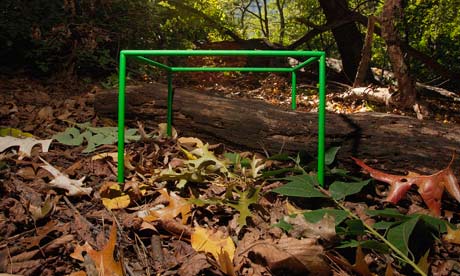
Or is it?
You observe the meandering, yet purposeful path of a scavenging ant. A robin hops into your space and locates a worm burrowed in the ground (which is technically outside your designated area), but pulls it up into your cube of awareness. You take note of a discarded fall leaf, following the wind's guidance to an unknown resting place where it shall return to the soil that bore it.
The foreword of the book boasts:
"After encountering this book, you will never look at the tiniest sliver of your own backyard or neighborhood park the same way; instead, you will be stunned by the unexpected variety of species found in an area so small."I believe it, for I am learning the unshakable beauty found in the tiniest of gifts; the joy of being attentive to every disturbance, each movement a sign of life and a reminder that the Creator never ceases to create.

The glory of the unimpressive requires something of the observer that the vistas of the Grand Canyon do not.
Faithfulness.
For it is only in the act of staying present that our wearisome, entertainment-seeking souls can know the splendor contained within one cubic foot. The majesty of the mountains is declared beautiful by its first time visitor. However, the square foot of forest is known to be most beautiful by the one who has spent time there.
 |
| The hidden beauty of the Wyoming mountains (Photo credit: Andrew Harlan) |
It's an awful lot like living in a small town. It's easy to become restless moving about the same few miles. It's easy to become bored with the same sidewalks, same neighbors with the same gripes, same food at the same restaurants, same conversations with the same friends.
Oh, but the riches we miss when we run because of boredom! We miss goodness, beauty and the knowledge of a place that only comes with time.
Welcoming friends and strangers into a home that is known and settled.
Being surprised by how much you have yet to learn about friends you know so well.
Understanding the pain of a community, not through reading books, but by walking on the sidewalks, listening to the neighbors and observing patterns long ingrained.
Learning that love does not exist apart from loving the person, neighbor, townie right in front of you.
Realizing we must know one another in order to love.
Being known by people not because you've told them who you are, but because they've seen who you are.
 |
| My few cubic feet |
Sometimes the world seems too big, sometimes too small. But either way I am learning that there is infinite beauty in each and every cubic foot of this beautiful planet, especially in our backyards, small towns and closest friends. Go. Explore. Discover. Stay.
“Because children have abounding vitality, because they are in spirit fierce and free, therefore they want things repeated and unchanged. They always say, "Do it again"; and the grown-up person does it again until he is nearly dead. For grown-up people are not strong enough to exult in monotony. But perhaps God is strong enough to exult in monotony. It is possible that God says every morning, "Do it again" to the sun; and every evening, "Do it again" to the moon. It may not be automatic necessity that makes all daisies alike; it may be that God makes every daisy separately, but has never got tired of making them. It may be that He has the eternal appetite of infancy; for we have sinned and grown old, and our Father is younger than we.
-GK Chesterton in Orthodoxy
Subscribe to:
Posts (Atom)